Live · 2026
project-a*
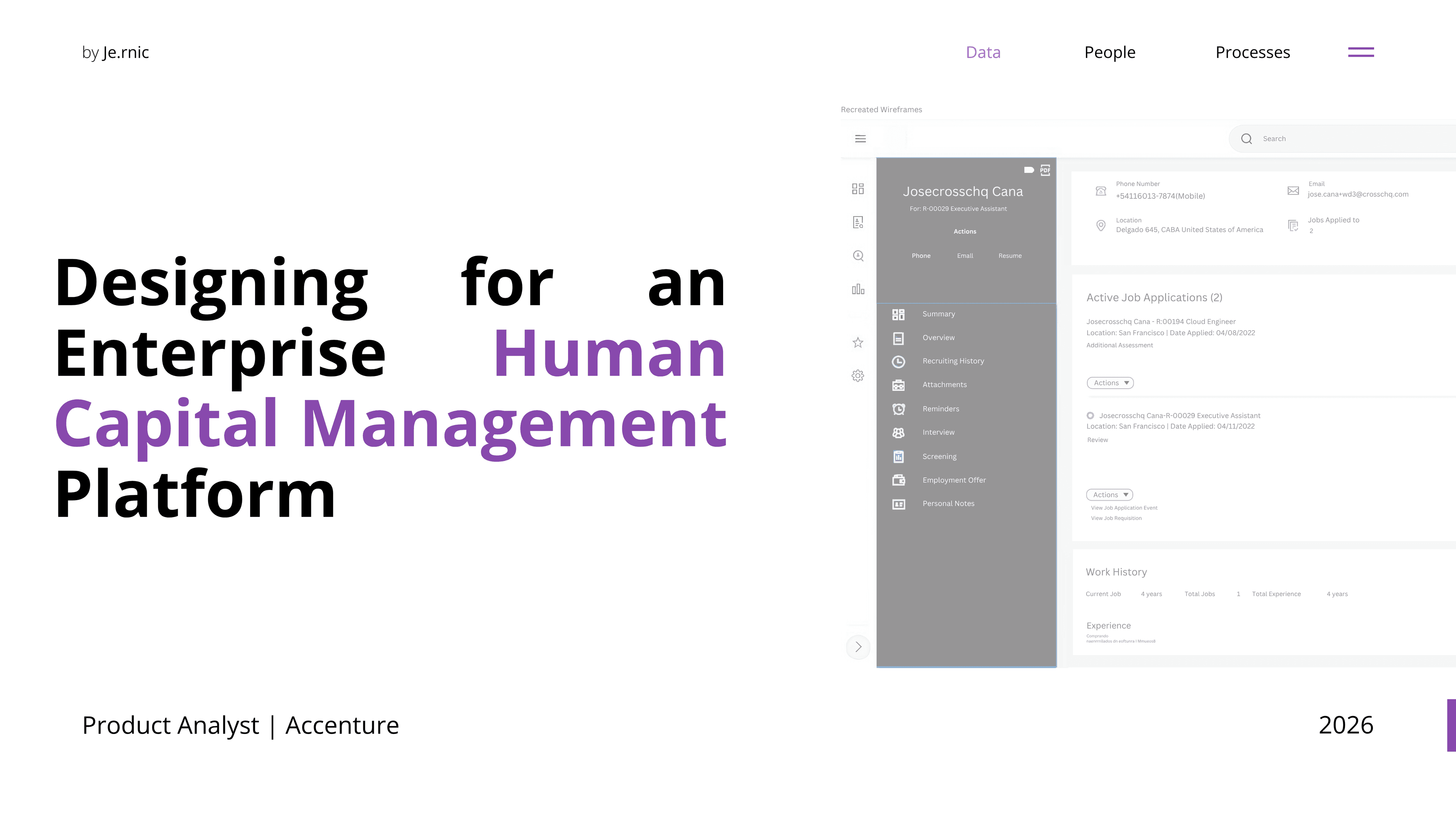
Designing for an Enterprise Human Capital Management Platform to improve user experience across recruitment workflows.
The challenge
How do you improve an existing enterprise product without disrupting the people, data and processes already relying on it?
01. Overview
Improving a live HR platform
At Accenture, I worked on enhancements to an established HR platform in the health and public sector. Every change had to coexist with live records, established workflows and the needs of different user groups.
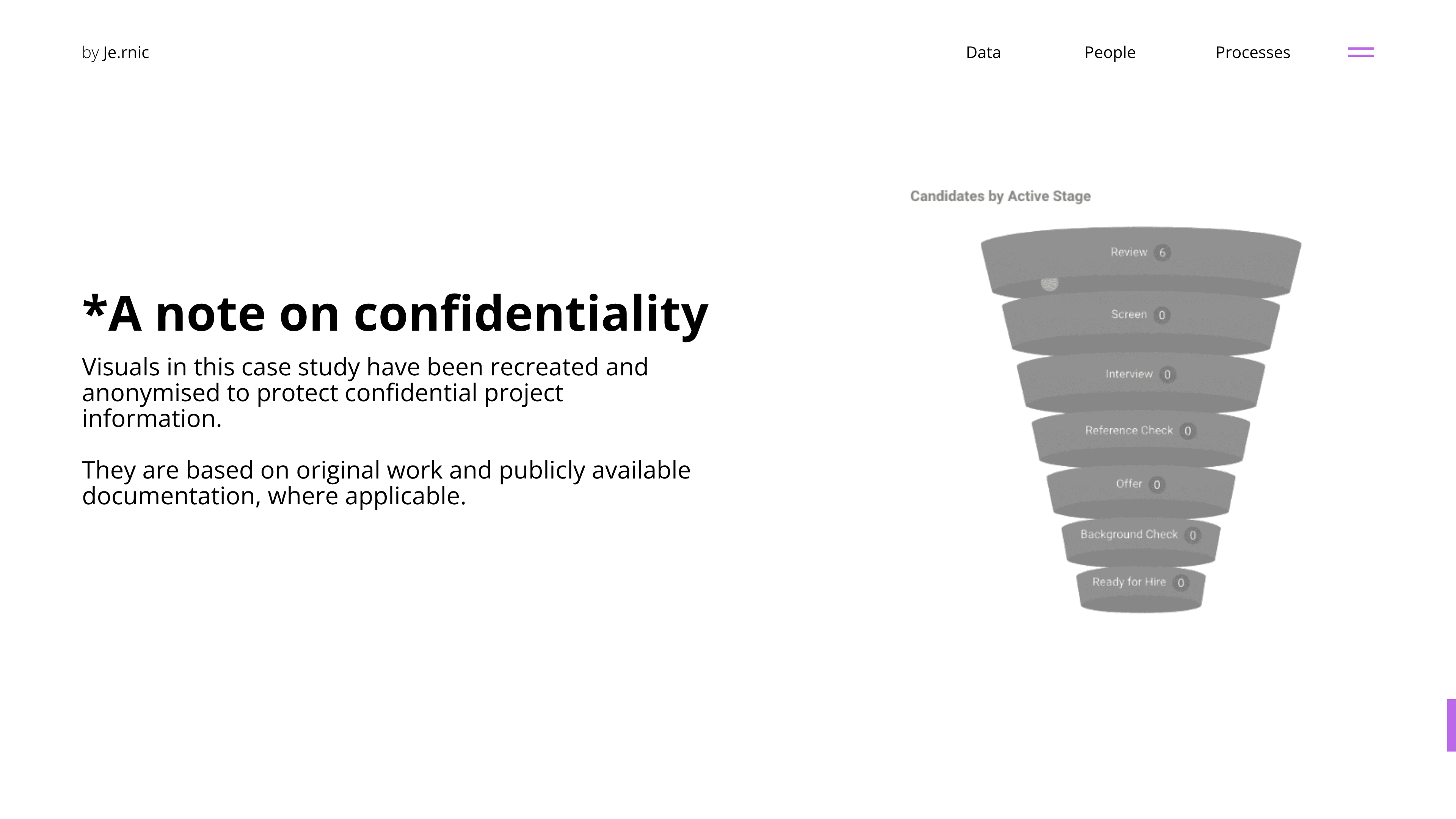
This case study focuses on a parallel reference-check enhancement, designed to let recruiters initiate reference checks alongside existing screening activities.
Working with a client-side HR information systems (HRIS) analyst, I helped clarify inherited requirements, align stakeholder expectations and expand test coverage to support delivery.
| platform reach
~2,270
average monthly users
Project estimate for the wider platform.
02. Context
Bringing reference checks into the workflow
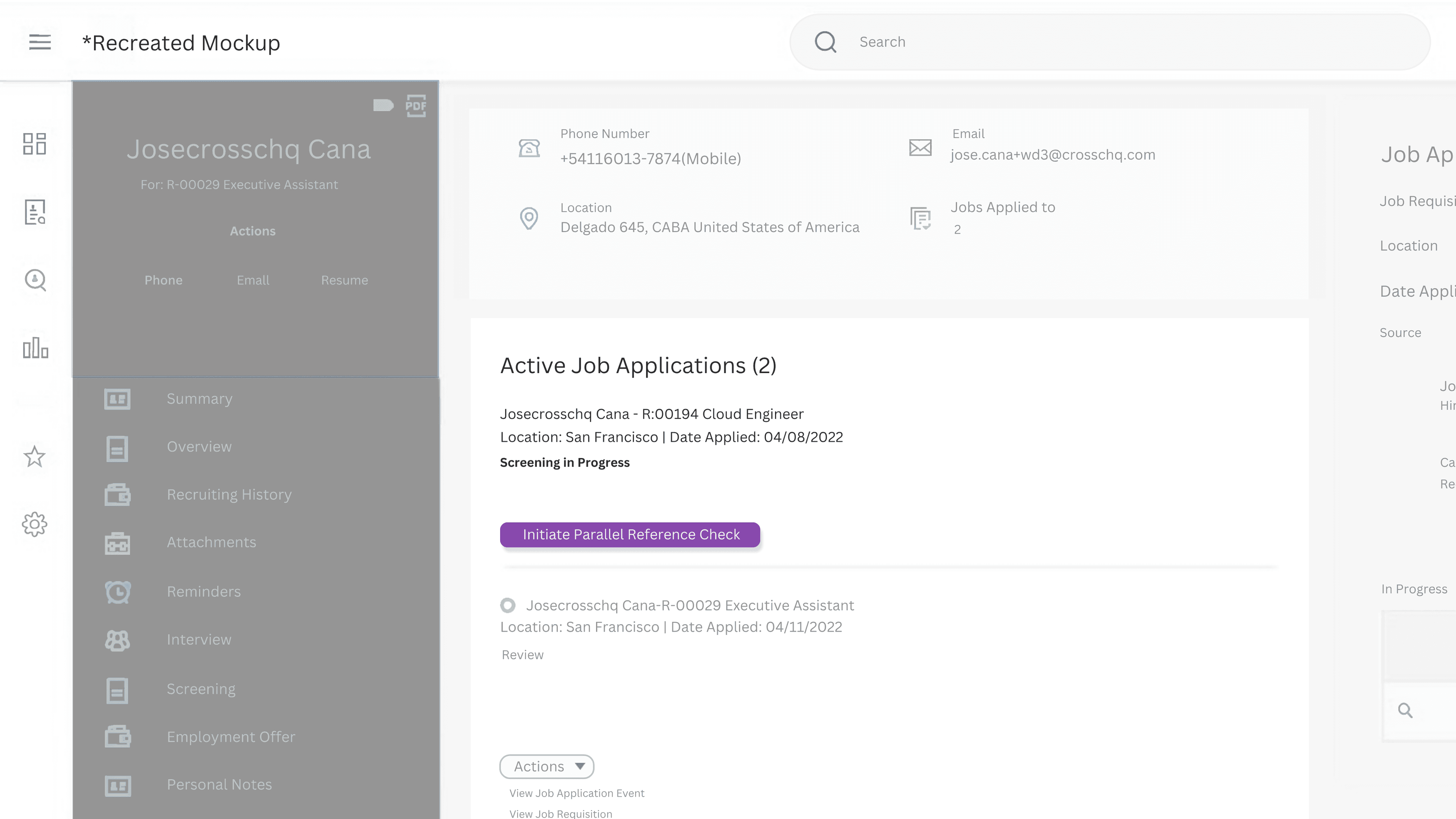
Recruiters contacted candidates' referees manually through email, telephone and other external channels. The proposed enhancement brought the initiation step into the HR platform.
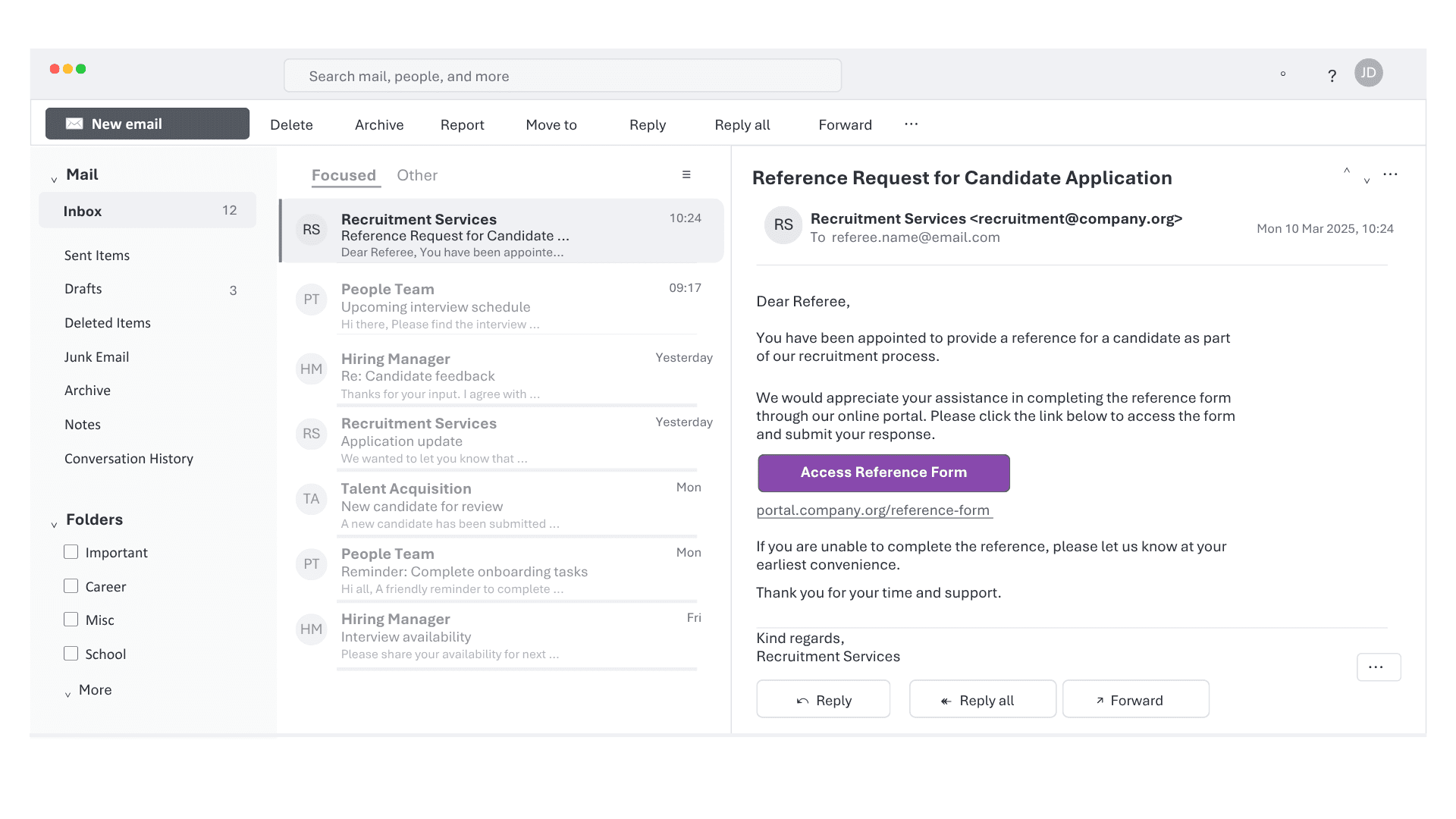
Once a candidate supplied referee details during their application, a recruiter could review those details and select “Initiate Parallel Reference Check”. The platform would send the reference-request emails automatically, reducing manual outreach while other screening activities continued.
before
after
The first challenge was the handover
By the time I took over, the request had been open for seven months. The signed-off design no longer gave us a reliable picture of the current implementation, creating a gap between stakeholder expectations and what was ready.
Together with the client-side HRIS analyst, I reconstructed the intended behaviour from the available documentation and clarified what still needed to be delivered.
Taking ownership began with untangling what had been promised, built and assumed.
03. Process
Creating a clearer path to delivery
| timeline after handover
2 months
Following seven months as an open request.
Iterative Development
Late changes to the referee questionnaire had created repeated revisions and delayed development. Sequential handoffs made each change harder to absorb.
We agreed on the key design requirements upfront so development could proceed alongside shorter feedback and testing cycles. This gave the team a clearer basis for implementation while allowing gaps to surface earlier.
Test Suite
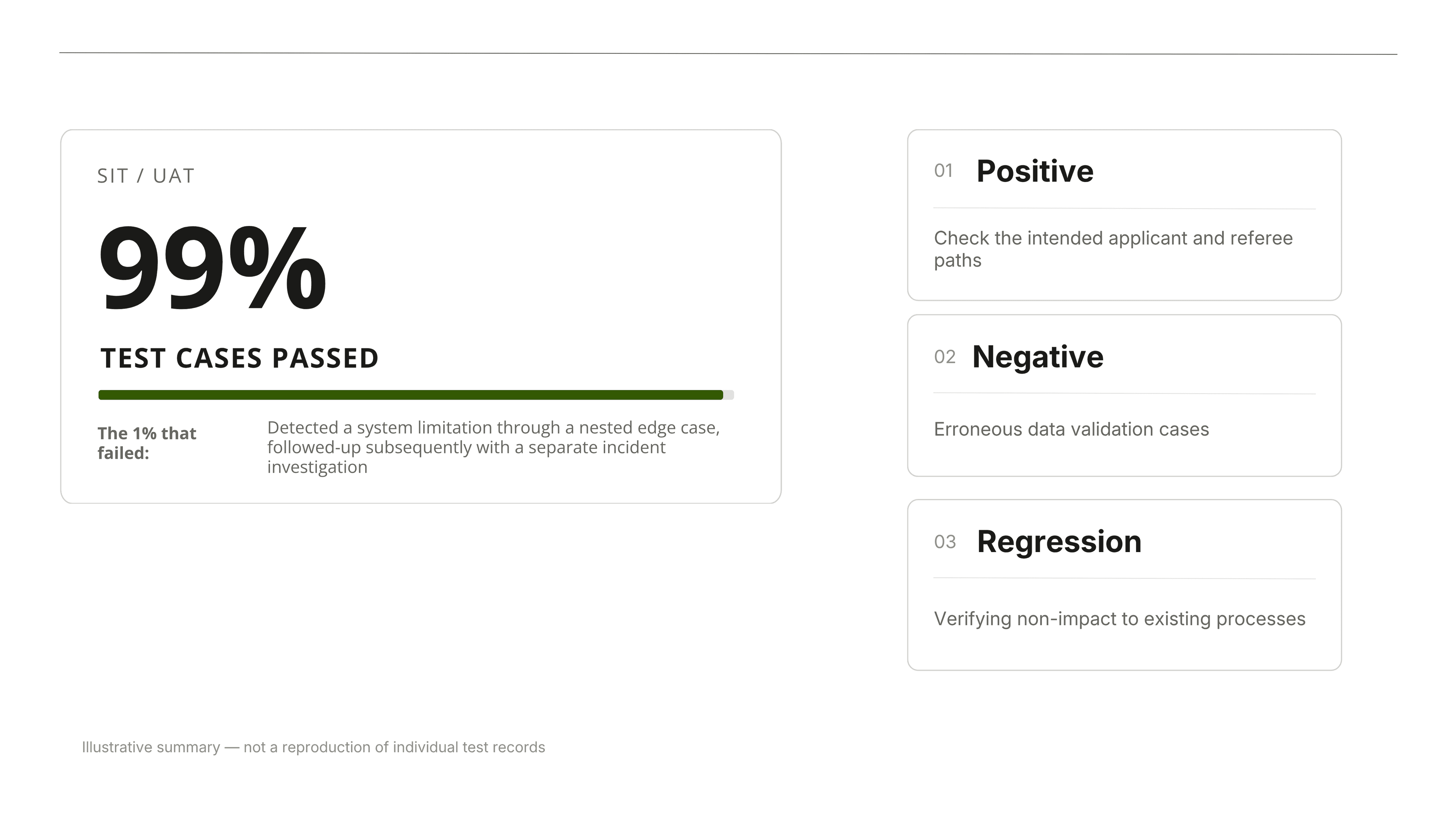
The inherited test suite concentrated on the intended user journey. It offered less coverage of invalid inputs, alternative paths and effects on existing workflows.
I pushed to expand the suite with positive, negative and regression cases. Testing alongside development helped us identify gaps while there was still time to address them.
04. Outcomes
99% of test cases passed
Across system integration testing (SIT) and user acceptance testing (UAT), the test suite recorded a 99% pass rate. The remaining 1% exposed a system limitation that required specialist follow-up through a separate investigation.
Broader coverage helped us surface issues before deployment. The unresolved case also showed why a high pass rate still needed to be read alongside the exceptions.
Regression testing mattered because the recruitment workflow served 20 stakeholder groups, with local differences in document generation and assessment stages. We checked both the new reference-check flow and existing paths, including cases ineligible for the enhancement.
05. Takeaways
What I would validate next
An acknowledged limitation would be that I was unable to conduct direct research with the platform users. Requirements and pain points came through client stakeholders, so my understanding of the experience relied on reported needs.
In another iteration, I would like to observe recruiters carrying out reference checks and test the flow with them through open-ended user research studies, focusing on whether they understand when to initiate a check and what happens afterwards.
I would also use the "time spent initiating checks" and the "need for manual follow-up" as part of my metrics. These qualitative and quantitative measures would help establish whether the enhancement did provide a significant drop in administrative efforts, or if the feature implementation was purely a perceived convenience.
Designing for continuity
This work taught me to treat inherited decisions, live data and organisational rules as part of the design problem. An improvement had to make sense within the workflows people already depended on.
My contribution was to connect the user-facing requirement with the behaviour and testing needed to support it. That meant clarifying an incomplete handover, navigating stakeholder conversations and working closely with the client team under tight capacity constraints.
Good enterprise product design is not just about what users see. It is also about how clearly the data, rules and foundations behind that experience are crafted.